Telephony remains a central tool in most companies. Customer service, sales prospecting, technical support… a large proportion of exchanges with customers and prospects still take place over the telephone. But traditional telephone systems were often based on cumbersome physical installations, difficult to adapt as teams grew or worked remotely.
With the arrival of VoIP (Voice over Internet Protocol), companies began to use the Internet to manage their telephone communications. It was against this backdrop that IPBXs came into their own. An IPBX organizes a company’s incoming and outgoing calls via an IP network, while offering features such as call routing, voice menus and telephone activity monitoring.
Today, a new evolution has taken hold: the IPBX cloud. Instead of installing an on-site system, companies can manage their telephony from a platform accessible via the Internet, enabling them to rapidly deploy a cloud IPBX switchboard, without the need for a complex technical infrastructure, while retaining the tools needed to manage the communications of a sales team or customer service department.
Points to remember
- An IPBX is a business telephone system that uses the Internet (VoIP) to manage calls.
- Previous PBX and PABX systems relied on on-site infrastructures, which were often more complex to maintain.
- Cloud IPBXs simplify telephony implementation by eliminating the need to install a server in the company.
- Modern solutions offer features such as call routing, voice menus, activity statistics and CRM integration.
- For sales teams and customer services, a cloud IPBX enables calls to be better structured and telephone activity to be monitored.
- Solutions such as Kavkom now make it possible to manage corporate telephony via a cloud platform, without the need for a heavy technical infrastructure.


Boostez la productivité de vos équipe commerciales grâce à Kavkom, le logiciel de téléphonie d’entreprise 100% cloud.
Planifier une démo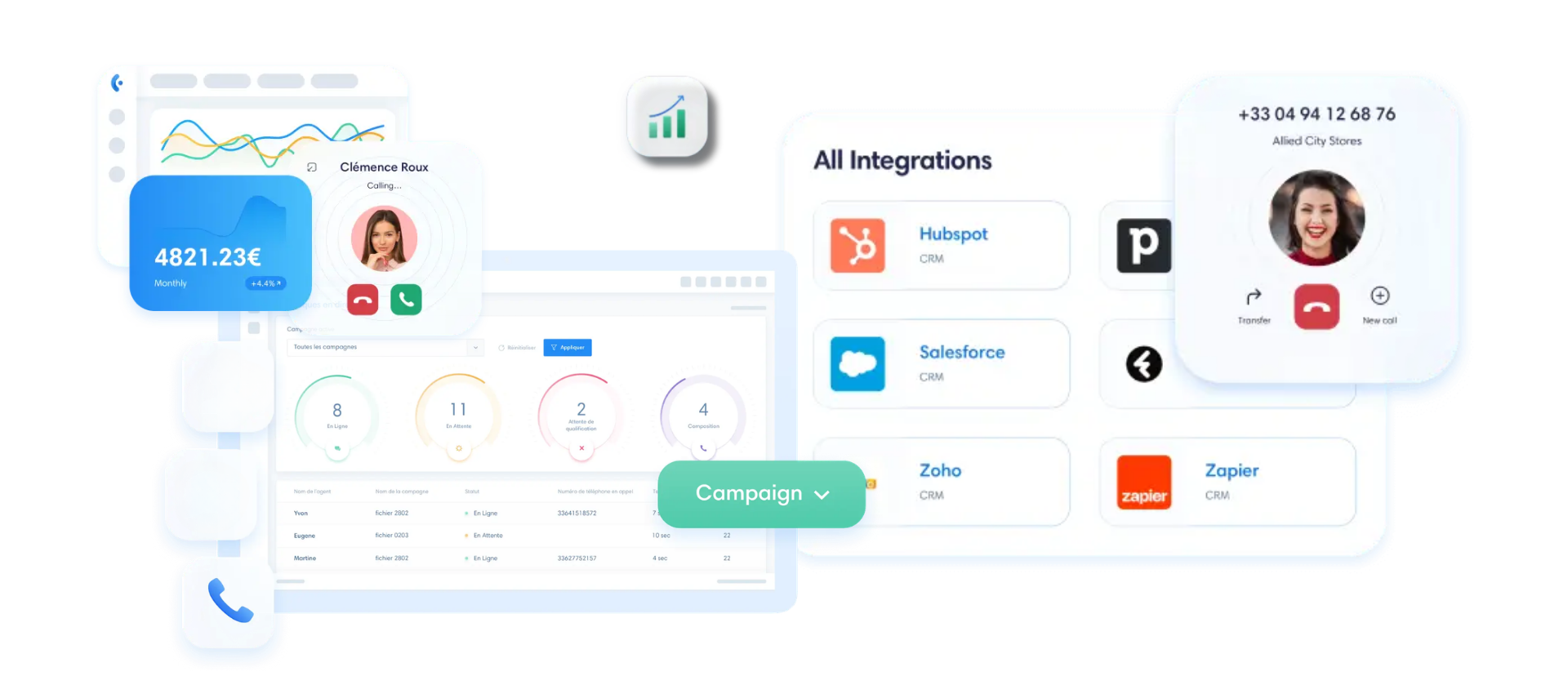
What is an IPBX
Simple definition of an IPBX
An IPBX (Internet Protocol Private Branch Exchange) is a corporate telephony system that uses the Internet to manage callsIPBX (Internet Protocol Private Branch Exchange) is a corporate telephony system that uses the Internet to manage calls.
Its role is comparable to that of a switchboard. It organizes communications between company employees and external callers.
In concrete terms, an IPBX allows you to :
- receive incoming calls
- make outgoing calls
- distribute calls to the right departments
- manage the company’s internal telephony.
The main difference with older switchboards is the technology used.
Traditional systems were based on the traditional telephone network.
An IPBX works with VoIP (Voice over Internet Protocol), which means that calls are routed via the Internet.
What is an IPBX used for?
In a company, an IPBX is first and foremost used to structure call management.
When a customer calls a company, several scenarios can be configured:
- a voice menu to guide the call
- transfer to a specific department
- queuing if all agents are busy.
For example, a company can create a telephone reception service with several options:
- press 1 to contact support
- press 2 to speak to the sales department
- press 3 for billing.
The call is then automatically routed to the appropriate team.
This type of organization quickly becomes indispensable as soon as the company receives several calls in parallel.
Why companies use an IPBX
An IPBX meets a number of operational needs.
Firstly, it allows you to centralize your company’s telephony.
All communications go through a single system, simplifying call management.
Secondly, it facilitates work organization.
Companies can define routing rules, create agent groups or set up queues.
Finally, it tracks telephone activity.
Managers can analyze :
- number of calls received
- duration of conversations
- team activity.
This information is particularly useful for sales and customer service teams, where the telephone remains an essential communication channel.
The benefits of an IPBX for businesses
Adopting an IPBX enables companies to modernize their telephony while simplifying communications management. Using VoIP, calls are routed via the Internet rather than the traditional telephone network, introducing greater flexibility into the organization of the telephone system.
Reduced communication costs
One of the first advantages of an IPBX is cost. Calls are routed via the Internet, which can reduce certain communications-related expenses, particularly for calls between multiple sites or international calls. Companies can also avoid having to install multiple physical telephone lines.
Greater flexibility in line management
With an IPBX, it’s generally easier to add or remove users. Companies can adapt their telephone system to the size of their teams or the evolution of their business, without having to modify the entire technical infrastructure.
Access to advanced functions
Modern IPBX solutions offer a host of features to facilitate call management. These include voice menus (IVR), automatic call routing, activity statistics and integration with CRM tools used by sales teams.
Telephony adapted to new ways of working
With IP telephony, employees can use the communication system from different devices, such as a computer, mobile application or compatible IP phone. This makes it easier for companies to manage multi-site or telecommuting teams.
How an IPBX works
An IPBX is used to manage a company’s telephone communications via the Internet. To understand how it works, all you need to remember is that calls no longer pass exclusively through the traditional telephone network. Instead, they transit an IP network, i.e. the Internet used by the company.
In concrete terms, when someone makes a call, the voice is transformed into digital data. This data is then transmitted over the network, and converted back into an audio signal on arrival. This principle is based on VoIP (Voice over Internet Protocol), the technology that enables calls to be made over the Internet.
The role of the IPBX server
At the heart of the system is the IPBX server.
This server acts as a call management center. In particular, it handles :
- connect users to the telephone system
- distribute incoming calls
- manage internal calls between employees
- apply routing rules configured by the company.
When a call arrives, the IPBX server analyzes the rules defined in the system. It can then decide to direct the call to a specific department, a group of agents or a queue.
For example, a call may be automatically routed to the sales department during business hours, and then to a greeting outside these hours.
Equipment used with an IPBX
An IPBX system can work with several types of device.
The most common are :
- IP telephones, which connect directly to the Internet
- softphones, i.e. applications for making calls from a computer
- mobile applications, which enable business telephony to be used on smartphones.
In many companies, employees simply use a computer and a headset to manage their calls.
An evolution towards cloud solutions
Historically, IPBX systems were installed directly in the company, on a local server.
But today, more and more organizations are adopting cloud IPBX solutions. In this model, the infrastructure is hosted online and accessible via the Internet.
This simplifies setting up the telephone system and facilitates access to telephony from different devices and workplaces.
What is the difference between PBX, PABX and IPBX?
The terms PBX, PABX and IPBX all refer to switchboard systems used in business. The main difference between these technologies is the way in which calls are transmitted and managed.
The following table summarizes the main differences between these three types of switchboard.
| Technology | Network type | Infrastructure | Flexibility |
| PBX | Conventional telephone network | On-site equipment | Low |
| PABX | Conventional telephone network | On-site equipment with automated management | Average |
| IPBX | IP network (Internet) | Software or cloud infrastructure | High |
PBX: the traditional switchboard
The PBX (Private Branch Exchange) is one of the first systems used to manage a company’s internal communications.
It is based on the traditional telephone network. Calls are routed via physical telephone lines and an infrastructure installed directly in the company.
This type of system already made it possible to :
- connect several telephone sets
- transfer calls
- manage internal telephony.
But it often required a substantial hardware infrastructure and regular technical maintenance.
PABX: the digital evolution of the PBX
The PABX (Private Automatic Branch Exchange) is a more advanced version of the PBX. It also works with the traditional telephone network, but introduces automated call management. Companies can more easily configure certain functions, such as transfers or extension management.
However, the infrastructure remains based on on-site equipment.
IPBX: business telephony via the Internet
The IPBX represents the evolution towards Internet-based telephony.
Unlike previous systems, it uses VoIP to transmit calls over an IP network.
This makes it possible to :
- use the Internet for telephone communications
- easily connect multiple sites or remote employees
- add new users without modifying the physical infrastructure.
Today, many companies have replaced their old switchboards with IPBX solutions, or with cloud IPBX systems that simplify telephony management even further.
On-premise IPBX vs. cloud IPBX: what are the differences?
When a company wants to set up an IPBX system, there are two possible approaches: install an on-site IPBX or use a cloud IPBX.
Both models are based on VoIP, but they differ mainly in the way the infrastructure is managed.
On-site IPBX
An on-site IPBX is installed directly in the company. The system relies on an internal server to manage telephony. The company must therefore set up the technical infrastructure needed to operate the solution.
This usually involves :
- a dedicated server
- specific network configuration
- regular technical maintenance.
This model offers total control over the infrastructure, but often requires technical skills to manage the system on a day-to-day basis.
For some organizations, particularly large companies with in-house IT teams, this type of installation may still be relevant.
IPBX cloud
With a cloud IPBX, the infrastructure is no longer installed in the company. The system is hosted online and accessible via the Internet. Users simply connect to the platform to manage their calls.
This model allows you to :
- rapidly deploy a telephone system
- easily add or remove users
- access telephony from different devices.
Employees can use the solution from a PC, a mobile application or a compatible IP phone.
Why more and more companies are adopting the cloud
Today, many companies are turning to cloud IPBX solutions. This model simplifies the technical management of telephony and makes it easier to adapt to new ways of working, particularly when teams are spread over several sites or work remotely.
Cloud solutions also offer greater flexibility to evolve company telephony over time.
Key features of a modern IPBX
IPBX systems do more than just receive and make calls. Modern solutions offer a number of features that enable companies to better organize their communications and monitor the telephone activity of their teams.
These tools are particularly useful for customer services, sales teams or in-house call centers.
Interactive Voice Response (IVR)
Interactive Voice Response, often referred to as IVR, allows you to create a telephone reception menu.
When a customer calls, they can be automatically directed to the right department.
For example:
- press 1 for support
- press 2 for sales
- press 3 for billing.
This type of system reduces call transfers and improves communications management.
Intelligent call routing
Call routing lets you define rules for distributing communications.
A call can be directed to :
- a specific agent
- a user group
- a queue.
Rules can also depend on certain parameters, such as opening hours or agent availability.
Call supervision and statistics
Supervision tools enable team managers to monitor telephone activity.
They can consult indicators such as :
- number of calls received
- duration of conversations
- call volume per agent.
This data can be used to analyze team performance and identify peak periods of activity.
Call recording
Call recording is often used to :
- train teams
- check the quality of exchanges with customers
- analyze specific situations.
In sales teams or customer services, this can help improve communication methods and interaction follow-up.
Integration with CRM tools
Modern IPBX solutions can connect to the CRM systems used by the company.
When a call comes in, the customer record can be automatically displayed on the user’s screen.
Call-related information, such as notes or recording, can then be saved in the CRM. This keeps a history of interactions with each contact.
Why sales teams use a cloud IPBX
In many companies, the telephone remains a central tool for sales and customer service teams. Prospecting, prospect follow-up, management of incoming requests… a large proportion of interactions are still carried out by call.
In this context, an IPBX cloud system helps to structure the work of teams and better monitor sales activity.
Monitor team activity
Sales managers often need to understand how the telephone business works.
An IPBX can be used to monitor several indicators:
- number of calls made and received
- average length of conversations
- customer waiting time
- activity by agent or by team.
This information helps managers to analyze performance and better organize the work of their teams.
Improve call management
In a sales team, calls can come from several sources:
- prospects who contact the company
- existing customers
- prospecting campaigns.
An IPBX cloud lets you organize these call flows thanks to a range of features:
- automatic call distribution
- queues
- routing to available agents.
This prevents calls from going unanswered or teams from being overloaded at certain times.
Training and supporting teams
Supervision tools integrated into certain IPBX solutions also provide support for employees.
For example, a team manager may :
- listen to certain calls
- analyze customer exchanges
- identify areas for improvement.
These functions are often used to train new employees or improve the quality of customer interactions.
Adapting to distributed teams
With cloud IPBX solutions, employees can use company telephony from different devices.
They can make and receive calls from :
- a computer
- a mobile application
- a compatible IP phone.
This makes it easier to organize work when teams are spread over several sites, or when some employees work remotely.
Kavkom: an IPBX cloud solution for sales performance
Companies using a cloud IPBX are generally looking for two things: a solution that’s easy to deploy, and tools that are adapted to the day-to-day work of their teams.
In this context, some platforms focus on corporate telephony and the needs of teams who use the telephone as their main working tool.
A 100% cloud VoIP telephony solution
Kavkom is a corporate telephony solution accessible via the Internet. Companies can test the Kavkom solution without obligation, to see how it works with their teams.
Teams can use telephony from several types of device:
- a computer via a web interface
- a mobile application
- a compatible IP phone if required.
This approach makes it possible to rapidly deploy a telephone system and add new users without complex technical modifications.
Tools designed for call-intensive teams
Some companies use the telephone intensively. This is often the case for sales teams, customer services or in-house call centers.
In this context, the platform offers several productivity-oriented features, such as :
- a predictive dialer for call campaigns
- real-time supervision tools
- detailed statistics on telephone activity
- call recording for analysis and training.
These features make it easier for team managers to monitor employee activity and analyze the performance of call campaigns.
Integration with CRM tools
In many companies, sales teams already work with a CRM to manage their contacts and track opportunities. An IPBX solution can integrate with these tools to centralize call-related information.
For example, when a call comes in, the contact record can be automatically displayed in CRM. Call-related information, such as notes or recording, can then be saved in the customer’s history. Kavkom offers integrations with several CRMs used by sales teams, such as HubSpot, Salesforce or Pipedrive.
A flexible solution for companies
Some companies need to quickly adapt their telephony infrastructure to suit their business.
Kavkom offers a flexible model, including :
- no obligation to use
- prorated billing based on usage
- the ability to quickly add or delete lines.
This type of operation allows companies to upgrade their telephone system without heavy contractual constraints.
How to choose an IPBX for your business
The choice of an IPBX system depends mainly on how the company is organized and how the teams use the telephone.
Before selecting a solution, it is useful to identify several criteria that will influence the implementation of the telephone system.
Assessing team needs
Not all companies use telephony in the same way.
Some teams make just a few calls a day.
Others, such as sales or customer service teams, spend a large part of their time on the phone.
It is therefore important to identify :
- number of users
- daily call volume
- specific team needs.
For example, a prospecting team may need tools dedicated to call campaigns, while a customer service department may prefer to manage inbound calls.
Identify required functionalities
IPBX solutions often offer a wide range of features. The challenge is to select the ones that really meet your company’s needs.
The most common features include
- interactive voice response (IVR)
- automatic call routing
- statistics and supervision
- call logging
- CRM integration.
An appropriate solution must give teams easy access to these tools, without complicating day-to-day use.
Analyze how easy it is to set up
Some solutions require extensive technical installation. Others operate entirely in the cloud and can be set up quickly.
For many companies, simplicity of deployment is becoming an important criterion. A cloud solution can often reduce technical constraints and get teams up and running faster.
Compare costs and flexibility
Finally, it’s important to analyze the solution’s pricing structure.
Companies can compare :
- any installation costs
- subscription costs
- contract flexibility.
Some solutions, for example, allow you to add or remove lines as your business grows.
Boostez la productivité de vos équipe commerciales grâce à Kavkom, le logiciel de téléphonie d’entreprise 100% cloud.
Planifier une démoFAQs
What is an IPBX
An IPBX (Internet Protocol Private Branch Exchange) is a corporate telephony system that uses the Internet to manage calls. It enables calls to be received and placed, communications to be distributed between employees and internal telephony to be organized. Unlike old-fashioned switchboards, an IPBX works with VoIP, which means that calls are routed via an IP network.
The difference between IPBX and PABX
The main difference is in the technology used. A PABX relies on the traditional telephone network and an infrastructure installed within the company. An IPBX, on the other hand, uses the Internet to transmit calls via VoIP, providing greater flexibility and making it easier to use telephony from multiple sites or for telecommuting.
What is an IPBX cloud?
A cloud IPBX is an online, hosted business telephony system. The company doesn’t need to install a server or technical infrastructure on site. Users simply access the system via the Internet to make or receive calls and manage communications from a computer, mobile application or compatible IP phone.
How much does an IPBX cost?
The cost of an IPBX depends on the model used. An on-site system generally involves infrastructure and maintenance costs. Cloud IPBX solutions, on the other hand, operate on a per-user subscription basis, enabling companies to tailor their phone system to the size of their teams and their needs.
How to choose an IPBX for your business
When choosing an IPBX, the most important thing is to analyze the needs of your teams: number of users, call volume and required functionalities such as call routing, statistics or CRM integration. Many companies today prefer cloud solutions, as they enable rapid deployment of a telephone system without the need for a complex infrastructure.
Conclusion
IPBX systems have transformed the way companies manage their telephony. Using VoIP, they enable calls to be managed via the Internet, while offering useful features such as call routing, voice menus and telephone activity monitoring.
Today, more and more organizations are turning to cloud IPBX solutions. This model makes it possible to deploy a telephone system without heavy technical infrastructure, and to rapidly equip teams, whether in the office, at several sites or working from home.
For companies where the telephone remains a daily working tool, such as sales teams or customer service departments, solutions like Kavkom enable telephony to be managed via a cloud platform, with tools for monitoring call activity and organizing team work.