





Imagine you’re managing a multi-site sales or support team, and you need a simple tool for calling, receiving and tracking exchanges. Google Voice seems a reassuring option. In this section, we sift through what users say, nothing else. Our aim is to help you see what difference it makes to your day-to-day life, and what you should look out for when comparing it with Kavkom.
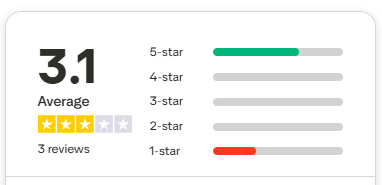
Feedback was mixed, with a slight bias towards the positive. Out of 30 reviews analyzed, recurring trends can be observed. On the plus side: easy-to-integrate API, simple installation, clear interface and good call quality. Limitations: frequent bugs, service interruptions and support that can be hard to reach. In concrete terms, it looks like a solution that’s pleasant to deploy and manage on a day-to-day basis, but with technical vagaries and uneven support from moment to moment.
“Google Voice API is easy to integrate and stable, which enables good call and SMS management in our applications.” – Technical integration with API

“Call quality is very good and customer support is responsive and competent. ” – Trustpilot
“Google Voice works well but bugs and interruptions sometimes affect the user experience.” – Google
From an operational point of view, for a growing team, onboarding seems to be a snap, and getting to grips with the system is not time-consuming. On the other hand, recurring breakdowns or bugs can create gaps in the day of an SDR or support agent. For a team leader, this means planning alternatives in the event of an incident. When making a comparison with Kavkom, take a close look at the frequency of incidents reported and the consistency of support over time, as this is a point that impacts service continuity.
The reviews do not mention pricing, nor specific points such as volume discounts, ease of increasing or decreasing licenses, or any set-up or cancellation fees. Nor are there any reports of hidden surcharges in this corpus. In short, the subject of price is not documented in these reviews. For a serious assessment, you’ll need to supplement this with direct contractual verification.
If you’re comparing this point with Kavkom, use the same grid: price per user, commitment, conditions for reducing the number of licenses, any fees, and what’s included in the subscription. Here, the reviews on Google Voice don’t give any indicators of field experience on these elements, positive or negative.
Users cite three main aspects: call quality judged to be very good, a stable API for managing calls and SMS, and a simple interface that facilitates administration. Nothing is said in these reviews about advanced functions such as power dialer, detailed analytics, recording, transcription, IVR, or live supervision. Instead, the focus is on simplicity and basic robustness, when everything’s running smoothly.
“Set-up is simple and the user interface is clear, making day-to-day administration easy.” – Capterra

“Call quality is very good and customer support is responsive and knowledgeable.” – Trustpilot
For a manager, this means that your teams can get started quickly and without friction, and that your internal integrations via the API have a good chance of being stable. Concrete gain: less time wasted on configuration and maintenance. Risks to anticipate: the bugs and interruptions reported in several reviews can disrupt call campaigns or support during peak periods. If you’re comparing with Kavkom, line up the features that are essential to your use cases, and check the same points for both Google Voice and Kavkom: CRM integrations used, call control, supervision, recording and automation capabilities.
The reviews analyzed do not speak directly of security, MFA or authentication. Instead, they mention bugs and service interruptions. This is not security per se, but it does affect perceived availability and operational resilience.
“Google Voice works well but bugs and interruptions sometimes affect the user experience.” – Google

In practice, for a distributed or telecommuting team, these interruptions can generate missed calls, pending customer requests, and pressure on internal support. If you structure a continuity plan between Google Voice and Kavkom, expect the same level of requirements on both sides: failover methods, simple procedures for rerouting calls, and clear instructions for your agents in the event of unavailability.
The piloting aspect is particularly evident in the API. Users note an API that is easy to integrate and stable, enabling them to manage calls and SMS messages in their applications. Nothing is reported about real-time dashboards or exports integrated into the interface. So, on the basis of these opinions, we’d say that it’s better to manage calls “via API”, connected to your business tools, rather than through the native interface.
“Google Voice API is easy to integrate and stable, which enables good call and SMS management in our applications.” – Technical integration with API
For a team manager, this means you can centralize call and SMS data in your own tools if your technical team knows how to consume the API. In comparison with Kavkom, ask exactly the same questions of both solutions: API depth, available data, stability, quotas, and integration effort for your key KPIs such as response rate, average duration, and volume distribution.
None of the notices selected mention issue coverage, selection by country, region or city, or portage. It is therefore not possible to draw any conclusions on this aspect from this database.
If this is a key criterion for you, check the same criteria as for Google Voice and Kavkom: list of countries and types of numbers, porting times and conditions, and any gaps in coverage. The reviews we’ve analyzed don’t provide any evidence one way or the other.
This is the point of greatest contrast. Some praise responsive, competent support. Others report difficulties in reaching support, and bugs that are not quickly resolved. This experience gap can be explained by different situations, but it recurs too often to be ignored in a serious evaluation.
“Call quality is very good and customer support is responsive and knowledgeable.” – Trustpilot
“Customer support is difficult to reach and any bugs present are not dealt with promptly.” – Trustpilot
Business impact in plain English: in the event of an incident in production, you can either recover quickly or remain stuck for longer, depending on the queue and the effectiveness of the follow-up. For a team that can’t afford downtime, anticipate a simple protocol: who contacts support, what channel, what SLA is expected, and what Plan B if resolution is delayed. When comparing with Kavkom, investigate the same concrete points: average response times, handling of complex tickets, follow-up until resolution, and feedback from teams similar to yours.
The reviews don’t mention any specific CRM or business tools. The only clear angle is the stable, easy-to-integrate API, which lets you manage calls and SMS from your applications. This is a good signal for interoperability, without detailing the depth of ready-to-use connectors.
“Google Voice API is easy to integrate and stable, which enables good call and SMS management in our applications.” – Technical integration with API
For a decision-maker, this means that integration is probably feasible quickly if you have developers. In comparison with Kavkom, ask the same questions of both solutions: native integrations available in your stack, synchronization latency, automatic creation of records, call feedback, and possible limits per plan. Google Voice reviews don’t give any indication of these details, only positive feedback on the API.
In summary, Google Voice is perceived as simple to deploy, pleasant to administer, and backed by a reliable API, but with bugs and interruptions that come up regularly, and support experienced as variable. To make a proper comparison with Kavkom, keep the same grid on each point, and validate the elements missing from these reviews with a test or a contractual discussion.