Top 8 alternatives to LinkedPhone for business telephony and real-world use by sales teams and call centers

If you’re looking for the Top 8 alternatives to LinkedPhone for a business telephony This comparison has been designed with you in mind. It’s aimed at sales teams and in-house call centers who want to compare solutions based on actual use in the field, not just on data sheets. The aim is simple: to help you make a coherent B2B choice based on your context, constraints and operational priorities.

No credit card

No obligation

Custom demo

Quick comparison of the best alternatives to LinkedPhone

The solutions below have been compared in terms of their suitability for real-world use in corporate telephony, for sales teams and in-house call centers.

Solution Best for Key features Price positioning Score out of 10
Kavkom Performance-oriented sales teams and in-house call centers Predictive dialer, real-time supervision, CRM integration, operational reporting Flexible, no-commitment subscription, clear logic by usage 8,5
RingCentral Structured companies with multi-channel and IT needs Advanced routing, omnichannel contact center, analytics, collaboration Packaged offers per user, advanced options in higher ranges 7,5
Mitel Organizations with complex or hybrid telecom environments IP telephony, infrastructure management, supervision, network reliability Project and license-oriented model, more complex costs 6,5
Twilio Technical teams and products requiring customization Voice APIs, automations, scalability, technical integrations Usage-based billing, variable costs according to volume 6
Plivo Voice API developers and technical teams Call and SMS APIs, automation, international coverage Easy-to-understand but technical consumer model 6
Vonage SMEs and SMBs looking for a versatile UCaaS solution Cloud telephony, contact center, CRM integrations, reporting Per-user subscriptions with modular options 7
Dialpad Collaborative teams with AI usage AI transcription, supervision, cloud telephony, analytics Subscriptions per user, AI options in higher plans 7

Discover a more operational alternative to LinkedPhone

Kavkom stands out for its approach focused on corporate telephony and real-life use by sales teams and internal call centers, with simple implementation, clear cost logic and flexibility adapted to demanding B2B contexts.

Top 8 alternatives to LinkedPhone: detailed analysis

Kavkom

For whom it’s relevant

Kavkom is designed for companies that want enterprise telephonydesigned for sales teams and in-house call centers. Typically, a sales team who need to call, track and manage their business without piling up tools.

Features and real-life use

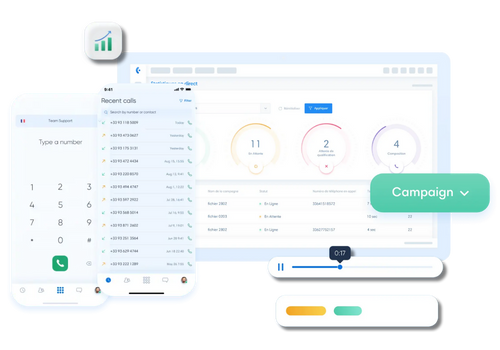
Features are field-oriented, so you can work faster and maintain visibility on a day-to-day basis.

  • Native predictive dialer to increase the number of successful calls and reduce time wasted on answering machines
  • Real-time supervision to control team activity
  • CRM integration to keep the customer context, without being a CRM
  • Clear reporting to monitor performance without cumbersome parameterization

Pricing positioning and flexibility

The logic is simple and straightforward, with a solution 100% cloud, hardware-free, with no commitment and prorated billing. The tool easily grows with the size of the team, without any breaks or complex projects.

Limits to be aware of

Kavkom makes a choice of specialization on sales performance and internal team management. It offers an open REST API for specific integrations, but is not positioned as a raw, developer-oriented telecom brick. Organizations looking for a very broad omnichannel platform, or one that is ultra-customized by development, may prefer other approaches.

Note

8,5 / 10


Why Kavkom stands out in this comparison

Kavkom meets all the criteria in the table: real use, rapid implementation, management of sales teams and internal call centers, with contractual flexibility that is rare in demanding B2B contexts.

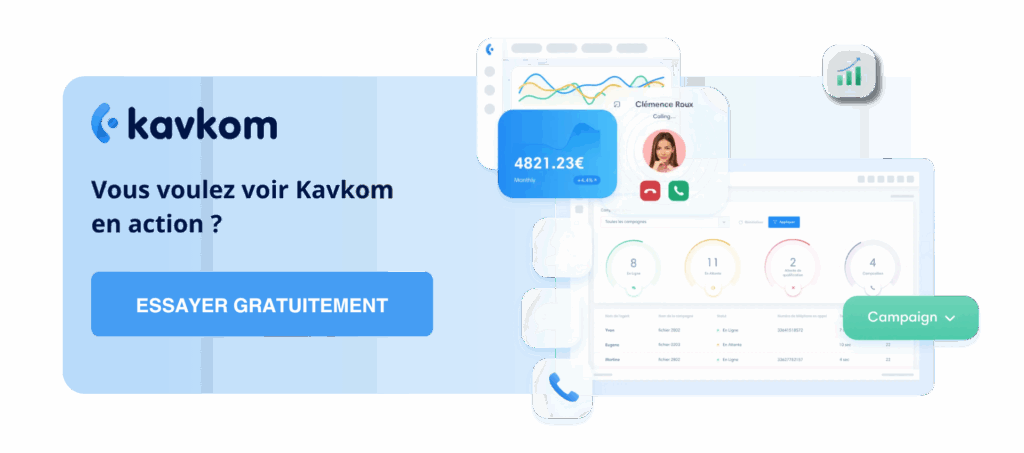
See Kavkom in action


Ringover

For whom it’s relevant

Ringover is ideal for SMEs and SMBs who want a central centralized communication platformwith a strong focus on customer relations and sales productivity.

Features and real-life use

  • Cloud telephony and advanced routing
  • Supervision and coaching tools
  • CRM and business tool integration
    These functions are well suited to structured teams already equipped with the right tools.

Pricing positioning and flexibility

The model is based on per-user subscriptionswith features that are moving upmarket. Readability is good, but annual commitment is frequent to optimize costs.

Limits to be aware of

For teams looking for maximum contractual flexibility or a very simple start-up, the pricing structure seems more rigid.

Note

7,5 / 10


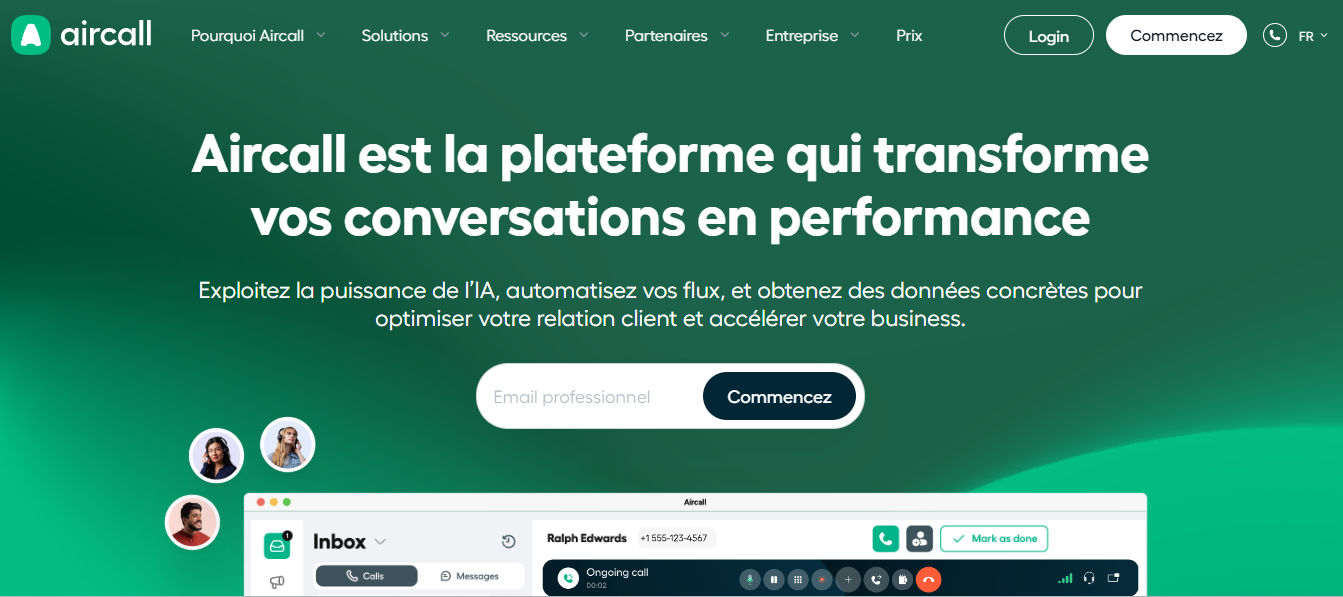
Aircall

For whom it’s relevant

Aircall targets fast-growing sales and support teams fast-growingwho want to deploy cloud telephony without heavy IT dependency.

Features and real-life use

  • Intelligent call distribution
  • Real-time monitoring and listening
  • CRM and helpdesk connections
    A seamless experience for sales and support teams.

Pricing positioning and flexibility

Pricing is per useroften with commitment. Costs increase with team size and access to advanced functions.

Limits to be aware of

Less suited to contexts requiring a very high level of customization or a very detailed pro rata cost logic.

Note

7 / 10


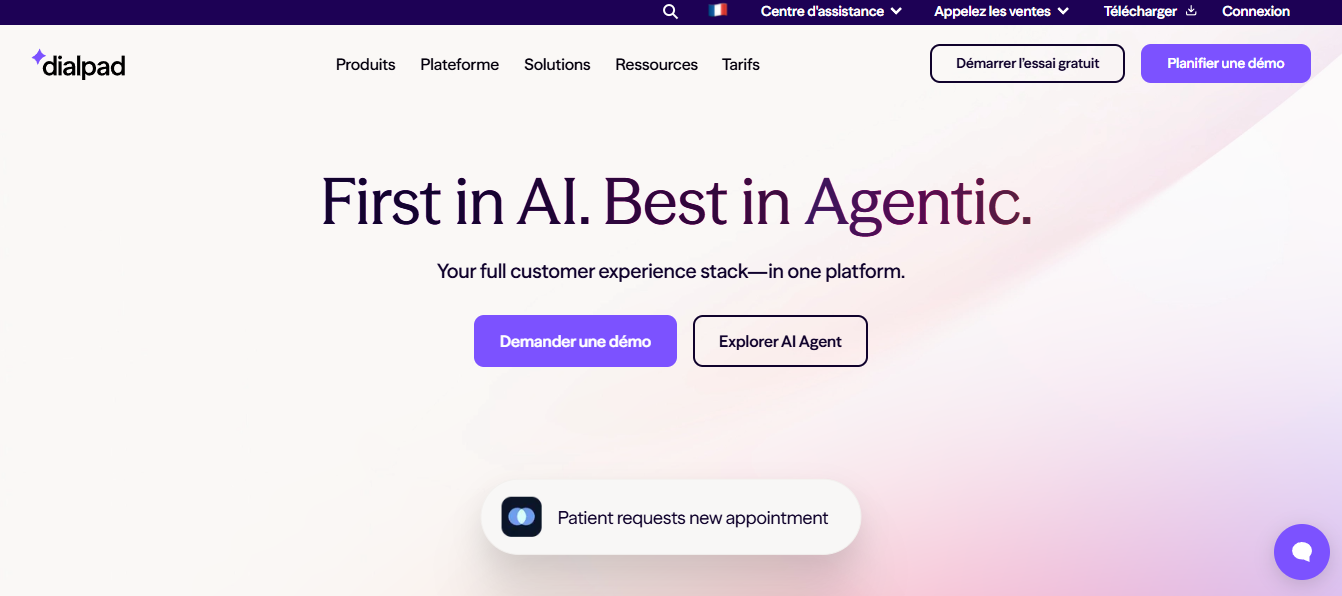
Dialpad

For whom it’s relevant

Dialpad is designed for teams who want a unified unified platform with a strong AI layer, combining calls and collaboration.

Features and real-life use

  • AI-based call transcription and analysis
  • Supervision and dashboards
  • CRM integration and collaborative tools
    Interesting for mixed sales and support teams.

Pricing positioning and flexibility

Offers are structured by user, with AI options often reserved on the top level. The logic is clear, but quickly becomes more complex.

Limits to be aware of

For use with a strong focus on prospecting and sales management, the approach may seem more general than necessary.

Note

7 / 10


CloudTalk

For whom it’s relevant

CloudTalk is ideal for international sales and support teams handling large, distributed call volumes.

Features and real-life use

  • Advanced routing and queuing
  • Monitoring and reporting tools
  • Multiple CRM connections
    The tool is designed for teams that are already organized.

Pricing positioning and flexibility

The model is per userwith functional levels. Legibility is good, but some key functions require higher levels.

Limits to be aware of

Less relevant for teams looking for very simple implementation or ultra-flexible contractual logic.

Note

7 / 10


JustCall

For whom it’s relevant

JustCall is designed for sales and support teams who want to centralize calls and messages in an omnichannel logic.

Features and real-life use

  • Automatic dialing
  • Customer interaction tracking
  • Extensive CRM integration
    Suitable for volume- and follow-up-oriented teams.

Pricing positioning and flexibility

Pricing per user is progressive, with options depending on the channels used. The structure is easy to understand.

Limits to be aware of

For organizations focused on fine-tuned control and real-time supervision, the tool seems less specialized.

Note

7 / 10


RingCentral

For whom it’s relevant

RingCentral targets larger companies with broad communication and collaboration needs.

Features and real-life use

  • Cloud telephony and collaboration
  • Advanced contact center
  • Extensive integrations
    Robust for complex environments.

Pricing positioning and flexibility

Offers are structured and often engaging, with a gradual move upmarket depending on usage.

Limits to be aware of

Complexity and functional scope can exceed the needs of more agile sales teams.

Note

7 / 10


Grasshopper

For whom it’s relevant

Grasshopper is especially aimed at freelancers and small businesses who want a professional numberwithout call center logic.

Features and real-life use

  • Basic call routing
  • Simple automated reception
  • Mobile-first management
    Suitable for very light uses.

Pricing positioning and flexibility

The model is simple and easy to read, with few parameters and quick set-up.

Limits to be aware of

Not suitable for structured sales teams or in-house call centers requiring supervision and control.

Note

5,5 / 10

How to choose the best alternative to LinkedPhone

1. Type of team

Start by identifying who will be using the solution on a daily basis.

  • Sales teams : need for outbound calls, follow-up and management.
  • In-house call centers : focus on supervision and volume management.
  • Support/customer service inbound calls and service continuity.
    Not all solutions cover these uses with the same level of efficiency.

2. Call volume

Volume changes the experience.

  • Low volume: quick and easy to use.
  • Medium to high volume: automation, numbering and stability are key.
  • Variable volumes: beware of the impact on productivity and cost trends.

3. Need for supervision

Ask yourself the question of piloting.

  • Simple use: basic monitoring of calls and activity.
  • Managerial use : listening, real-time monitoring and team support.
    A manager’s needs are not those of an isolated user.

4. Budget constraints

Take a look at cost transparency over time.

  • Easy to understand what’s included.
  • Ability to evolve without depending on complex options.
  • Controlling the impact of growth on the budget.

5. Expected flexibility

Finally, assess your need for flexibility.

  • Commitment or not depending on your context.
  • Adjust the number of users.
  • Easy to activate, upgrade or stop the solution.

Minichecklist decision-maker

  • Is my team sales-oriented, support-oriented or mixed?
  • Is call volume stable or highly variable?
  • Do I need daily or occasional piloting?
  • Am I comfortable with a configurable solution, or do I need turnkey solutions?
  • Is contractual flexibility crucial for my organization?

Kavkom or LinkedPhone: which alternative should you choose?

Kavkom and LinkedPhone do not respond to the same logic of use. The right choice depends above all on the role telephony really plays in your organization.

Is your telephony a simple contact tool or a daily operational lever?
If you’re primarily looking for a business number that’s easy to manage, LinkedPhone may suffice. As soon as calls become a mainstay of sales activity or an in-house call center, a more management-oriented approach makes sense, like the one offered by Kavkom.

Do you need to monitor and supervise team activity in real time?
For individual use or use with little supervision, LinkedPhone remains consistent. However, when it comes to manage callsWhen it comes to managing calls, supporting teams and maintaining operational visibility, a solution designed for this purpose is more appropriate.

Are you looking for a turnkey solution, or are you comfortable with regular adjustments?
LinkedPhone is well suited to simple, stable needs. An evolving organization, with clear business objectives, will benefit from a solution designed to adapt without complexity.

Is contractual flexibility important to your business?
If your user or call volume varies, the ability to easily adjust the solution becomes a real criterion, over and above functionality.

Do your teams work under pressure with volume or performance targets?
In this case, the tool needs to support the day-to-day rhythm and management, not just ensure that calls are received or sent.

In short, LinkedPhone is well suited to simple, unstructured uses. Kavkom appears to be a coherent choice for teams who use telephony as a means of communication. performance tool and day-to-day management, particularly on the sales side.

98% of our customers value the efficiency and simplicity of our services

Find out why over 8,000 companies work with Kavkom for their corporate telephony.

4.7 on Capterra

Frequently asked questions

Any other questions?
Consult our Online Help or Contact us

Which alternative to LinkedPhone is best for B2B companies?

Above all, it depends on the actual use of telephony within the company. A B2B structure with teams organized around calls, follow-up and management does not have the same needs as a small organization with occasional use. The right choice depends on the role of calls in day-to-day business.

Sales teams need outbound calls, business visibility and a minimum of supervision. Some solutions, like Kavkom, are designed to turn telephony into an operational lever, while others remain focused on simple communication. What’s important is the ability to support day-to-day performance.

Yes, but only in the context of internal call centers to the company. In this case, the needs are for control, real-time monitoring and team organization. Not all solutions offer the same level of supervision, or the same ease of implementation.

Some solutions offer greater contractual flexibility than others. This criterion becomes important when the business is changing rapidly or the workforce is fluctuating. The ability to adjust the tool without heavy constraints can weigh heavily in the decision.

We need to look beyond the initial subscription. The options required for actual use, the scalability of the teams and the legibility of the model over time are decisive. A simple solution can become more complex as business grows.