An efficient switchboard is the key to maintaining a fluid link with patients. But traditional systems quickly show their limitations : they are inflexible, costly to maintain and difficult to adapt to a clinic’s specific needs.
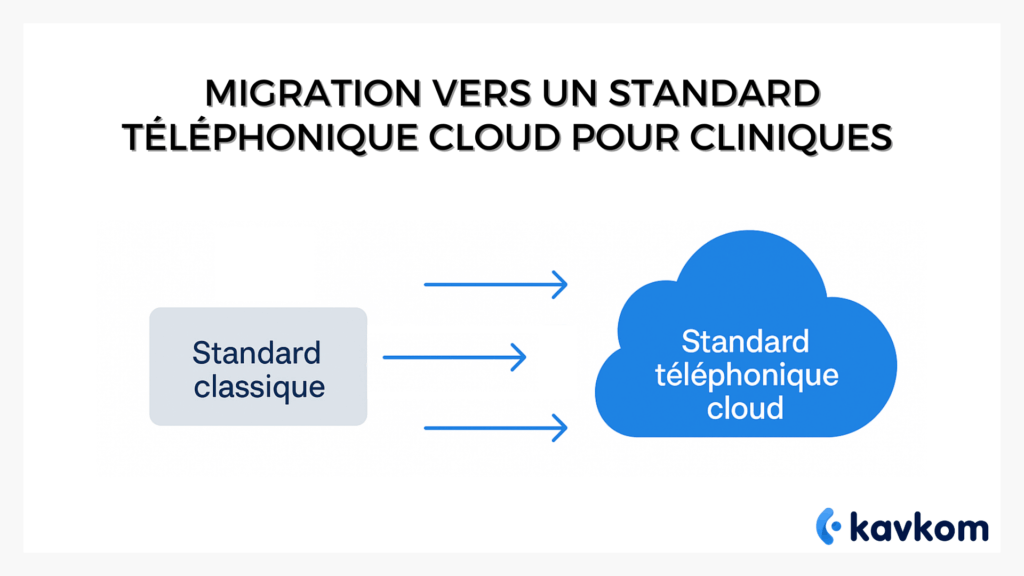
This step-by-step guide shows you how to migrate to a cloud-based medical switchboard. You’ll understand the problems this change solves, discover the concrete benefits and get a practical plan for a successful transition.
Points to remember :
- Clinics are faced with an overload of calls, putting pressure on secretaries and directly impacting the patient experience.
- A medical switchboard centralizes and distributes calls, taking into account the specificities of healthcare: emergencies, confidentiality, coordination of practitioners.
- Traditional systems have their limitations: lack of flexibility, high costs and difficulties integrating with medical diaries.
- Moving to thecloud transforms call management with intelligent routing, integration with schedules and RGPD compliance.


Boostez la productivité de vos équipe commerciales grâce à Kavkom, le logiciel de téléphonie d’entreprise 100% cloud.
Planifier une démo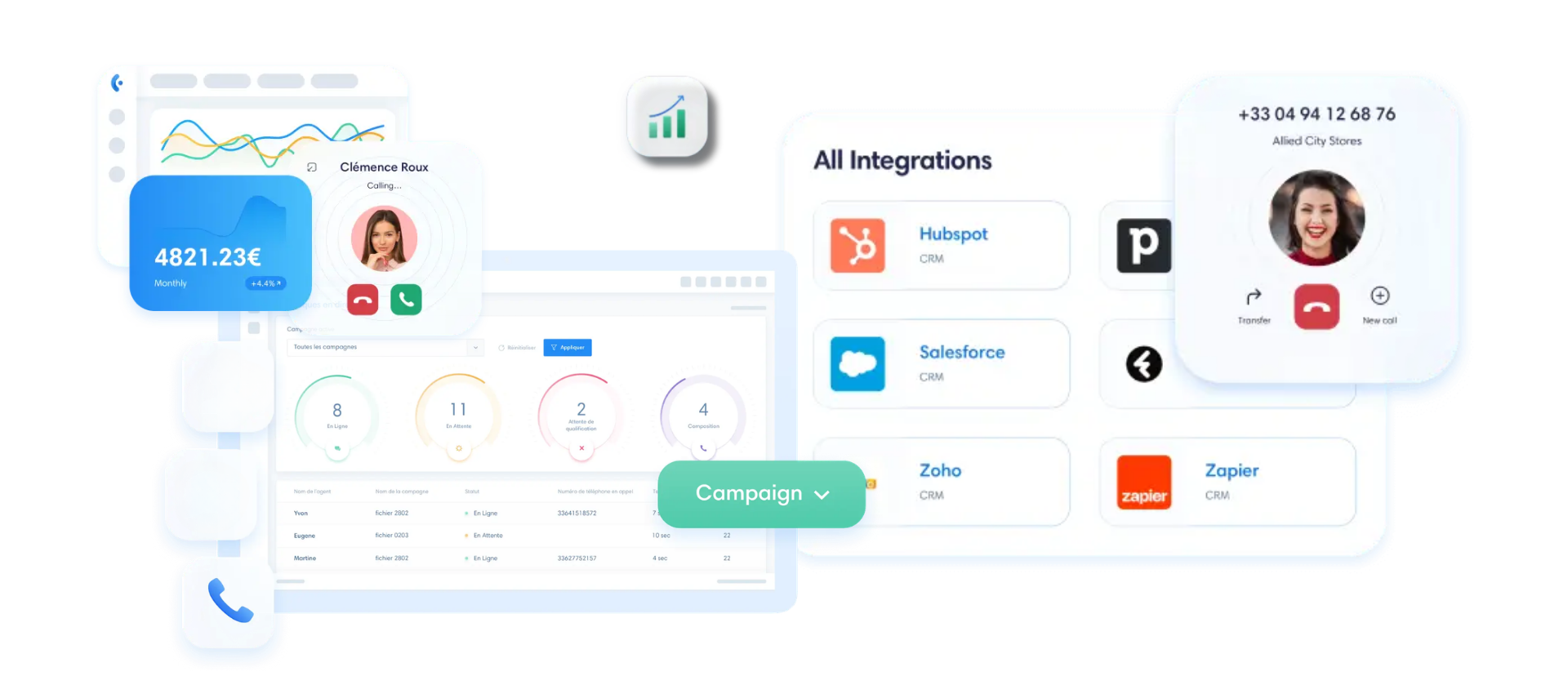
What is a medical switchboard?
A medical switchboard is an interface that centralizes the reception and distribution of calls within a healthcare facility. Unlike a conventional company switchboard, it meets specific requirements: emergency management, data confidentiality, coordination between practitioners and responsiveness to patients.
In a clinic, every call may concern a sensitive request: a post-operative follow-up, an unexpected emergency, or a simple change of schedule. The quality of telephone reception has a direct impact on patient perception.
Common problems in clinics
Despite their key role, many medical facilities still operate with aging systems.
- Call peaks difficult to manage: on Monday mornings, after vacations or during epidemics, the lines explode. Calls are lost, patients hang up.
- Lack of visibility over the diary: the secretary has to juggle several software programs, which slows down appointment scheduling.
- Stress for staff: having to handle several incoming calls while greeting patients at the reception desk creates a double burden that’s hard to cope with.
- Poor patient experience: long waits, multiple transfers, lost messages.
These problems are not just logistical. They have a direct impact on the quality of the patient relationship and on the clinic’s reputation. A missed call can mean a lost appointment, or even a delicate medical situation.
Why moving to the cloud is a game-changer
The cloud enables us to transform a rigid telephone system into an agile tool designed for healthcare.
- Intelligent management of incoming calls: personalized queues, music, adapted messages (e.g. emergency instructions).
- Integration with the medical diary: calls are linked directly to the practitioner’s schedule, making it easier to book appointments.
- Enhanced responsiveness: in the event of overload, calls can be redirected to another site, a teleworking secretary or a dedicated emergency service.
- Confidentiality and RGPD compliance: the secure cloud platform protects telephone data flows and data, while giving clinics control over their settings and access management to guarantee full compliance.
Before / After the cloud
| Situation | Classic standard | Cloud switchboard |
|---|---|---|
| Managing call peaks | Saturation, lost calls | Intelligent routing, queuing |
| Telephone reception | Long waiting times | Fluid, personalized messages |
| Agenda and planning | Double entry, frequent errors | Integration with medical diary |
| Flexibility | Fixed equipment, heavy maintenance | Accessible on any device |
| Privacy | Non-compliance risk | RGPD compliant hosting |
Switching to the cloud is like replacing a single line with a multi-lane freeway. Calls flow without traffic jams, and every patient quickly finds the right exit.
Boostez la productivité de vos équipe commerciales grâce à Kavkom, le logiciel de téléphonie d’entreprise 100% cloud.
Planifier une démoA step-by-step guide to migrating to a cloud switchboard
Switching from a traditional telephone system to a cloud solution may seem complex. However, the process becomes fluid if it is broken down into stages. Here’s how a clinic can modernize its telephone reception system without disrupting its business.
Step 1 – Audit the current system
Before making any decisions, it’s a good idea to take stock of the situation.
- How many incoming calls do you receive every day?
- What are the most critical peak times?
- What malfunctions are common (lost calls, failed transfers, out-of-sync schedules)?
An auditidentifies weak points, but also what’s already working. This is the basis for avoiding the same problems with the new system.
Step 2 – Identifying a clinic’s specific needs
Each medical facility has its own particularities. A small medical center will not have the same constraints as a hospital. Points to clarify:
- Emergency management: how to prioritize critical calls?
- Medical diary: should it be integrated directly with practitioners’ schedules?
- Telephone answering service: should it be provided in the evening or at weekends?
- Teleworking: should staff be able to pick up the phone remotely?
These needs must guide the choice of functionalities. The idea is to find a solution that adapts to the daily lives of secretaries and practitioners, not the other way around.
Step 3 – Choosing the right solution
At this stage, there are several options. Some clinics rely on outsourcing solutions, while others prefer an in-house cloud switchboard.
A cloud system offers invaluable flexibility:
- Intelligent call routing according to time or skills.
- Integration with medical management software.
- Multi-device access (PC, IP phone, smartphone).
- Automatic updates without heavy hardware.
The choice depends on the clinic’s size, budget and desired degree of autonomy.
Step 4 – Planning deployment and training
Migration doesn’t happen overnight. Good planning reduces the risk of service interruptions.
- Set a timetable: choose an off-peak period (e.g. outside school vacations).
- Preparing teams: informing secretaries and practitioners of upcoming changes.
- Parallel testing: run the old and new systems side by side for a few days to check their fluidity.
- Train staff: spend time getting to grips with the new switchboard.
This phase is decisive: a high-performance tool is useless if the team is not comfortable with its day-to-day use.
Step 5 – Monitor and adjust
Once the cloud standard is in place, it’s time to measure its effects. Most solutions offer detailed dashboards:
- Incoming and outgoing call volume.
- Average waiting time.
- Rate of calls answered.
- Breakdown by practitioner or department.
These indicators can be used to quickly identify areas for improvement. For example, if Monday morning calls remain saturated, it may be appropriate to temporarily reinforce the team or set up a specific greeting.
Checklist – Successful migration
To keep you on track, here’s a quick checklist:
- Audit of current system carried out.
- Specific needs identified (emergencies, diary, duty).
- Cloud solution selected according to the clinic’s criteria.
- Deployment schedule set.
- Secretary training organized.
- Follow-up of indicators set up.
A migration project should not be seen as a sudden break. Rather, it’s a gradual transition, with each stage reducing friction and paving the way for a more responsive and serene telephone service.
Boostez la productivité de vos équipe commerciales grâce à Kavkom, le logiciel de téléphonie d’entreprise 100% cloud.
Planifier une démoHow to choose the right provider for a clinical switchboard
The clinical switchboard market is vast. Between specialized healthcare providers, generalist solutions and cloud offerings, it can be hard to find your way around. And yet, there are certain criteria that really make all the difference in a medical environment.
Unavoidable criteria
- Reliability and security
A clinic switchboard must respect patient confidentiality. The CNIL reminds us that health data is particularly sensitive and requires compliant telephone tools. Hosting must be RGPD-compliant and offer full call traceability. - Flexible contracts
A hospital or clinic is subject to fluctuations in activity. A no-commitment solution with flexible billing allows you to adapt to periods of low or high activity. - User experience
An easy-to-use tool reduces stress for secretaries and minimizes scheduling errors. Ergonomics are as important as technology. - Integration with
medical diary The ability to connect practitioners’ schedules directly to the switchboard facilitates appointment scheduling and reduces double entry. - Human support
In the event of a problem, rapid response is vital. Support must be French-speaking, responsive and accessible by phone, not just via online tickets.
Available solutions
Several options are available to clinics:
- Outsourcing: entrust call management to a telesecretarial service provider. Practical for small structures, but less flexible.
- Internal cloud solution: install a switchboard hosted in the cloud, accessible by the team in real time. Ideal for maintaining control while reducing infrastructure costs.
Some platforms combine the best of both worlds. For example, Kavkom provides a 100% cloud switchboard, which clinics use to manage incoming calls themselves with greater efficiency and flexibility – without going through an outsourced telesecretarial service.
Key features of Kavkom :
- Intelligent routing according to schedule or department, to direct each call to the right team.
- Queues and IVR (interactive voice response) to structure reception and inform callers.
- CRM and business toolintegrations (Zoho, Salesforce, HubSpot, Pipedrive, Zendesk) + API to connect the clinical ecosystem.
- Real-time supervision with dashboards, recording and double-listening for quality control.
Boostez la productivité de vos équipe commerciales grâce à Kavkom, le logiciel de téléphonie d’entreprise 100% cloud.
Planifier une démoEconomic and organizational benefits
A cloud switchboard doesn’t just improve patient reception. It also changes the internal organization and budget.
- Reduced costs: no need to buy heavy equipment or pay rigid contracts.
- Financial flexibility: prorated billing, possibility of suspending a line during the summer.
- Increased productivity: fewer dropped calls, less time spent looking for a free slot.
- Enhanced image: a smooth, responsive welcome boosts patient confidence.
According to McKinsey, a company that succeeds in its digital transformation can see its operating profit increase by 40%, while an organization that fails to adapt risks suffering a sharp decline.
FAQ – Everything you need to know about medical switchboards
What is a telephony switchboard?
It’s a system that centralizes an organization’s calls and dispatches them to the right person or department. In a clinic, this is the first point of contact between patients and the medical team.
What is the medical switchboard service?
This is a telephone switchboard adapted to the healthcare sector, which handles incoming calls, appointment scheduling and, in some cases, the transmission of medical instructions. The aim is to streamline reception and avoid lost calls.
Which telephone switchboard to choose for a clinic?
The choice depends on the size of the organization and its needs. For a small facility, an outsourced telesecretariat may suffice. For a larger clinic, a cloud switchboard gives you maximum flexibility and control.
How do I answer a call to a clinic switchboard?
Medical reception must be both fast and empathetic. Cloud solutions can personalize on-hold messages, automatically display patient records, and redirect the call to the right practitioner or secretary as needed.
Conclusion
The telephone remains the backbone of patient relations. In a clinic, every call can represent an emergency, a sensitive request or a vital appointment. Relying on a cloud switchboard not only helps absorb call peaks, but also offers a more human and fluid welcome.
We’ve looked at the problems of traditional systems, the concrete benefits of the cloud and the steps to successful migration. You now have a roadmap for choosing and deploying the right tool for your clinic.
A final word of advice: take the time to compare service providers andinvolve your teams in the choice. The right switchboard is not just technology. It’s a trusted partner for your patients and practitioners.